


Improving digital wellbeing feels more urgent than ever. Screens are woven into how we work, relax, and stay connected, often without us noticing the trade-offs. Phones buzz, tabs pile up, and scrolling fills the gaps between tasks. It all adds up.
Many people feel the pressure to reply instantly or stay online longer than planned, only to realize hours have slipped by. Over time, this constant pull can chip away at focus, sleep quality, mood, and even relationships.
Asking “how to improve my digital wellbeing?” reflects a growing need to regain balance in an always-on routine. With a few deliberate adjustments, it is possible to regain control and use technology on your own terms.
What is digital wellbeing?
Digital wellbeing is about how your everyday use of technology shows up in your mind, body, and mood. It is not a call to step away from screens entirely.
Technology plays a major part in how we work, connect, learn, and unwind. The issue starts when use becomes automatic, constant, or driven by habit rather than intention.
Healthy digital wellbeing means you decide when and how devices fit into your day, instead of reacting to every alert or scroll prompt. It also means noticing how online time affects sleep, stress, focus, and relationships offline.
Digital wellbeing asks a simple question: does your technology support how you want to live, or quietly work against it?
How to recognize poor digital wellbeing
Poor digital wellbeing rarely shows up overnight. It usually creeps in quietly, out of habits that feel normal until they start taking a toll. The signs below can help you spot when your relationship with screens may need a reset. If several feel familiar, it may be time to pause and reassess how technology fits into your day:
Signs of burnout
Digital burnout often shows up as mental exhaustion rather than physical tiredness. Notifications feel intrusive, messages pile up faster than you can respond, and even short screen sessions leave you feeling drained or irritable instead of refreshed.
Distraction
Jumping between apps, tabs, and alerts can slowly chip away at focus. Tasks take longer, concentration breaks easily, and moments of boredom are quickly filled by reflexively reaching for your phone without much thought.
Anxiety
A constant need to stay connected can create unease. Feeling restless when offline, repeatedly checking for updates, or comparing yourself to others online can increase stress and quietly affect your sense of calm.
How to improve your digital wellbeing
So how does this work in real life?
Improving your digital wellbeing is less about cutting technology out and more about changing how it fits into your day. Small adjustments, repeated consistently, tend to have the biggest effect over time.
The actions below don’t require any drastic rules or all-or-nothing thinking. Together, these habits form a sustainable strategy to digital wellbeing improvement without demanding drastic lifestyle changes. Start with one or two, let them settle, then build from there:
Set boundaries and digital “quiet hours”
Technology is most disruptive when it has no limits. Creating clear quiet hours gives your brain space to slow down and reset. This could mean keeping phones away from the table during meals, shutting screens off an hour before bed, or avoiding notifications first thing in the morning.
What you need here is clarity. When these boundaries are predictable, your mind spends less energy reacting and more time recovering from constant alerts, updates, and scrolling.
Use focus or blocking tools
Distraction thrives on easy access. Focus tools work by removing that access altogether. Website blockers, app timers, or focus modes cut off the usual escape routes that pull attention away from meaningful tasks.
Instead of relying on self-control alone, these tools create structure around your attention. Over time, this makes concentrated work feel more natural and less draining.
Monitor your screen time
It is easy to underestimate how much time disappears into apps and platforms. Screen time tracking turns vague assumptions into visible patterns. Seeing real numbers often creates a moment of pause.
Certain apps may perform more than expected, while others fade into the background. With this awareness, patterns become easier to question and adjust without guilt or pressure.
Practice mindful tech use
Most digital habits run on autopilot. Before opening an app, take a short pause and ask what you are looking for. Information? Connection? A break from boredom? This simple question changes the interaction.
Technology becomes an intentional choice rather than a reflex. Over time, this habit builds a stronger sense of control and reduces the feeling of being pulled along by the screen.
Schedule offline breaks
Stepping away from screens matters more than most people realize. Short, intentional breaks support mental clarity and physical comfort. A few minutes of stretching, walking, or even looking outside helps reset focus.
These pauses interrupt long periods of passive consumption and give the nervous system a chance to recalibrate.
Prioritize real-world connections
Digital interaction has limits. Face-to-face conversations, shared meals, and physical activities offer a different kind of energy that screens cannot replicate.
Making time for these moments adds balance to digital use and often leaves you feeling more grounded afterward.
How BlockSite supports digital wellbeing
If these distractions feel relentless, BlockSite handles the problem from a sensible angle. This website and app blocker is built to change how you interact with the web day to day and doesn’t rely on bursts of willpower that could easily wear off after a few hours.
Rather than asking you to constantly resist tempting websites or apps, BlockSite alters your online environment. It helps you put boundaries in place, stick to routines, and reduce the mental noise that comes from constant switching between tasks. Over time, this structure supports digital wellbeing in a way that feels sustainable and not restrictive.
Below is how its primary features work together to support that balance:
Blocking sites
BlockSite lets you block individual websites (including the top blocked sites) or entire categories that repeatedly pull your attention away. Social platforms, news feeds, or entertainment sites can be restricted with a few clicks.
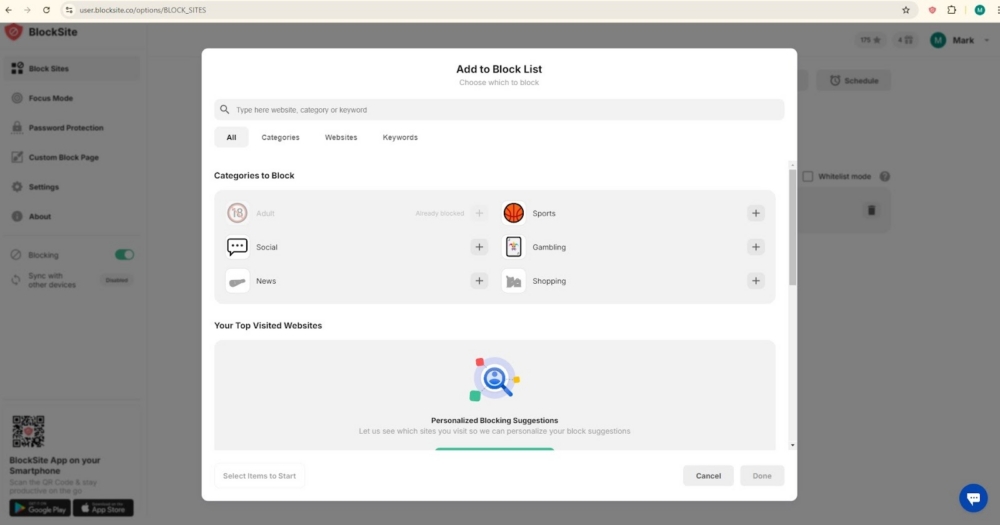
The value here is immediate. When distractions are no longer one tap away, your brain gets a break. You spend less time fighting urges and more time staying present with whatever you are doing, whether that is work, rest, or screen-free time.
Redirecting blocked pages
Instead of hitting an error page, blocked sites can redirect you somewhere else. This might be a calm page, a motivational reminder, or even a simple message reinforcing your goal.
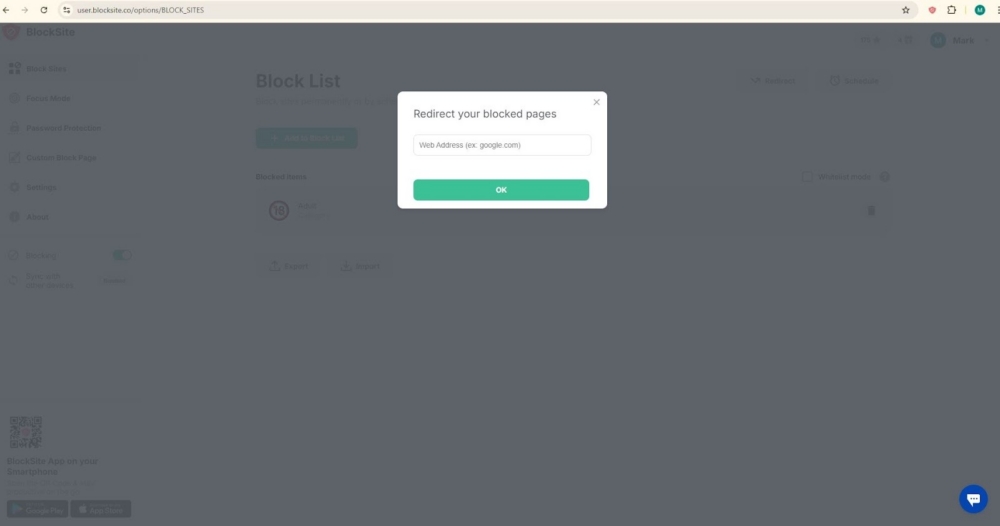
This small change matters. It removes frustration from the experience and replaces it with intention. Rather than feeling blocked, you are gently reminded why you chose to limit access in the first place.
Blocking schedule
Not all screen time is bad. BlockSite recognizes that by allowing scheduled blocking. You decide when certain sites are unavailable and when they are allowed.
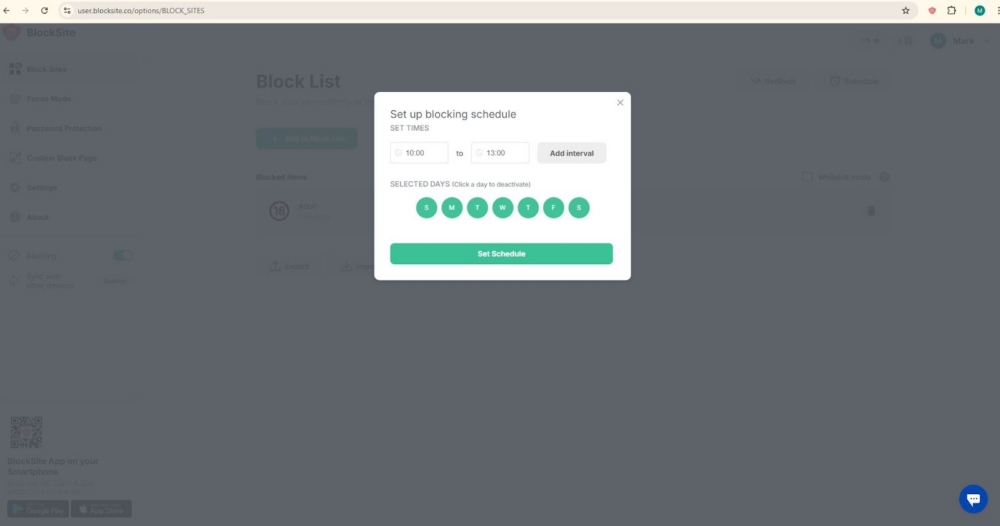
This is especially useful for routines. You can set focused work hours during the day, then block distractions again in the evening to protect rest, sleep, or time offline for doing screen-free activities. The schedule does the enforcing so you do not have to.
Focus Mode
Focus Mode is designed for moments when attention matters most. With it enabled, access is limited only to what you need for the task at hand.
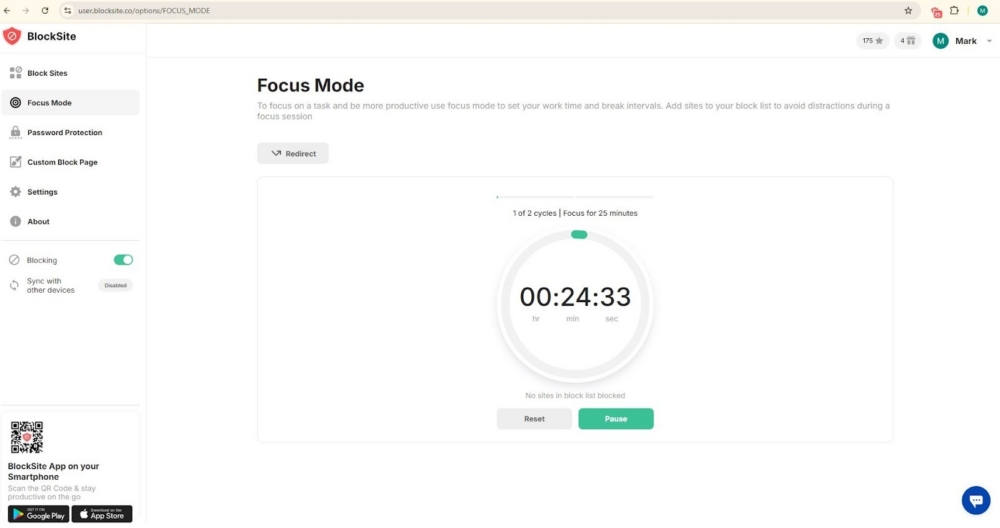
This reduces multitasking and mental strain. Instead of juggling tabs and notifications, you work within a quieter digital space that supports deeper concentration.
Custom block page
Blocked pages can display your own custom message. This could be a reminder, a goal, or a short note to yourself.
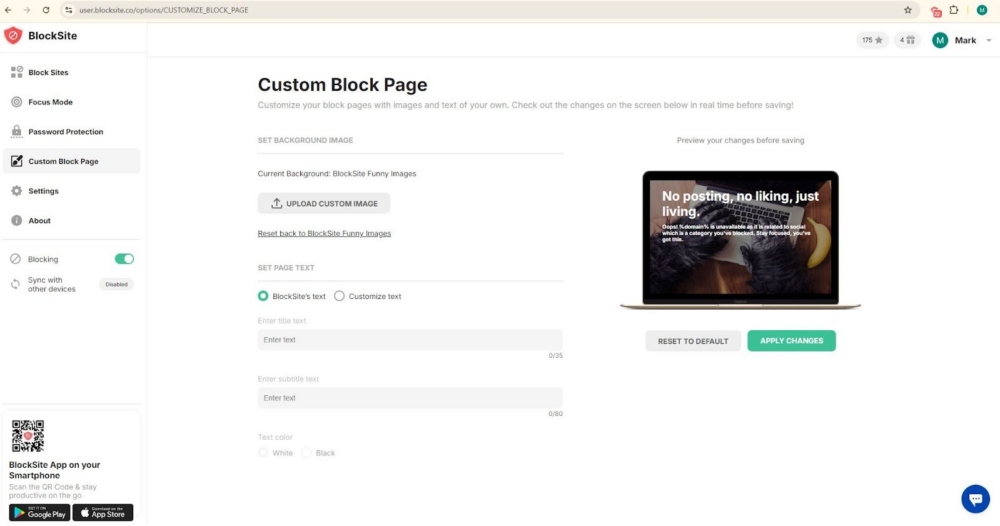
Seeing your own words adds a personal layer of accountability. It turns blocking into a conscious choice, reinforcing healthier digital habits each time it appears.
Pay attention to how you use technology
Improving your digital wellbeing does not require disconnecting from technology. Most issues start quietly. Too many tabs. Too many notifications. One short scroll that turns into half an hour.
Progress comes from awareness, clear limits, and habits that support how you want to work and think. When boundaries are in place, focus improves and mental noise settles. Technology starts to feel helpful again instead of demanding. This is where simple tools can help.
BlockSite gives structure to your intentions by limiting distractions and protecting your time when it matters most. Start small. One habit, one limit, then repeat it daily. Over time, your digital routines stop pulling you off track and begin working in your favor.
FAQs
What is digital wellbeing?
Digital wellbeing is about how technology fits into your day and how it affects how you think, feel, and function. It looks at whether your screen use supports your routines or quietly works against them. This includes mental focus, emotional balance, sleep quality, and even physical comfort. The goal isn’t to cut screens out completely. It’s to use them with intention, set limits that feel realistic, and stay aware of habits that creep in over time. When digital wellbeing is in a good place, technology feels useful rather than draining.
How can I tell if my digital wellbeing is suffering?
The signs often show up gradually. You might find yourself checking your phone without thinking, struggling to concentrate on simple tasks, or feeling uneasy when you are offline. Sleep disruption is common too, especially if screen time pushes later into the evening. Many people also notice mental fatigue after scrolling or a sense that time online lasts far longer than planned. These signals usually point to habits that need adjusting rather than a complete reset.
What are the best ways to improve digital wellbeing?
Start with structure and not restrictions. Clear screen limits work better when they fit into your existing routine. Plan device-free moments during the day, reduce notifications that pull your attention for no real reason, and create boundaries around work and personal time. Small changes done consistently tend to stick. Think of fewer rules and better habits.
Can digital wellbeing tools really make a difference?
They can, when used with a purpose. Tools that track usage or limit distractions help turn vague intentions into visible patterns. This awareness often leads to better focus, improved sleep, and a calmer relationship with screens. The biggest gains come when these tools support clear goals rather than act as background features.
How does BlockSite improve digital wellbeing?
BlockSite helps reduce digital noise during moments that require focus or rest. Features like scheduling, Focus Mode, and structured blocking support routines by removing common distractions before they interrupt you. It makes intentional screen use easier to maintain throughout the day.
What’s the first step to improving digital wellbeing?
Begin with awareness. Track how you use your devices and notice where time slips away. From there, set one simple rule, such as putting your phone away after a certain hour. Once patterns are visible, building structure becomes far more manageable.