





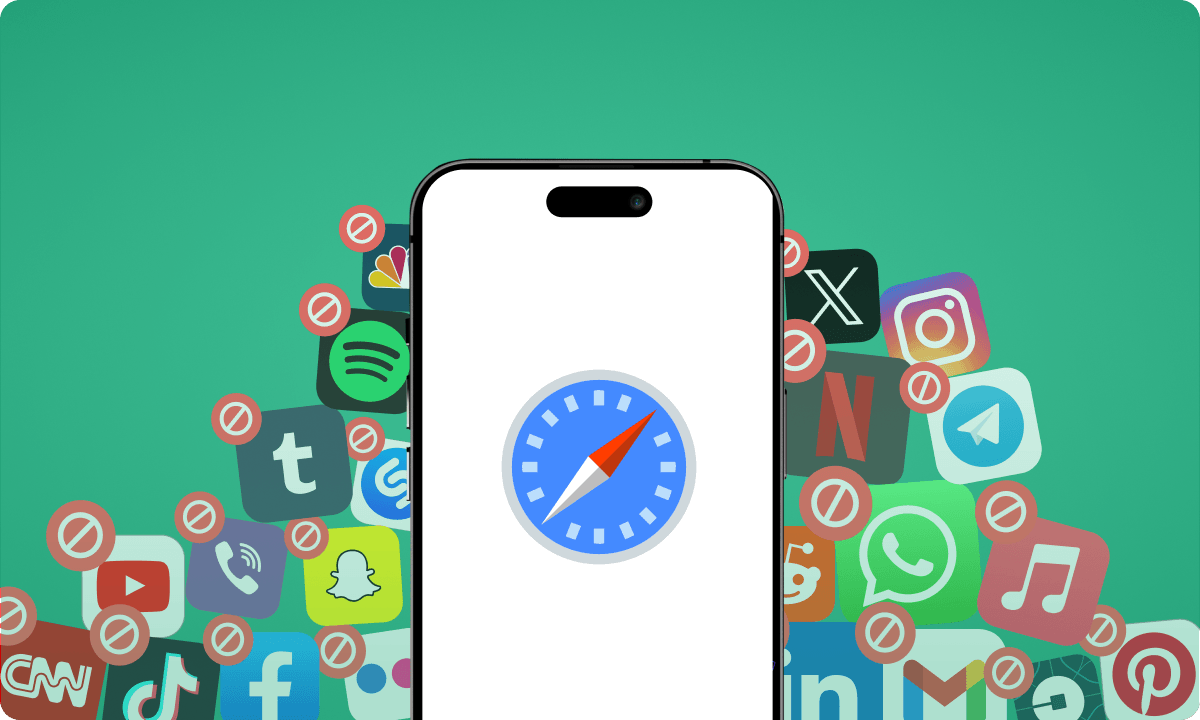
If you want to spend less time getting pulled into distracting websites, limit what children can reach, or keep work sessions from turning into social scrolling, locking access around Safari can help. The important thing to know up front is that Safari is a browser and not an app manager. On a Mac, you can use Safari extensions and built-in Apple controls to limit web access inside the browser. On iPhone, Safari-related limits and app limits work differently, so the setup depends on what you are actually trying to restrict.
That distinction is what trips people up. Some users want to block websites in Safari. Others want to stop themselves or their kids from opening certain apps altogether. Both are possible, but they happen through different tools. With Apple’s built-in settings and blockers such as BlockSite, it is much easier to control distractions, tighten browsing rules, and create a safer online experience without making your device harder to use.
Benefits of locking apps on Safari
1. Improve productivity and focus
The biggest reason people lock access around Safari is simple: fewer distractions. When distracting sites are available all day, it becomes very easy to switch from work to entertainment without even thinking about it. Blocking access during study hours, work sessions, or certain parts of the day reduces those impulse visits.
This is also where a blocker can support habit change. Instead of relying on self-control every few minutes, you set the rule once and let the tool handle enforcement. A good blocker becomes part of a broader productivity toolkit, especially for students, remote workers, and anyone who spends long hours on a laptop or phone.
2. Enhance time management
Many people do not need a full-day lock. They only need certain websites or apps out of reach during meetings, deep work sessions, homework time, or bedtime. That is where scheduling becomes useful. Rather than removing access permanently, you decide when restrictions apply.
This helps you divide your day more clearly. Work time stays for work. Breaks stay for breaks. Even a small change like limiting access during the first two hours of the morning can make browsing feel much more intentional.
3. Block inappropriate or distracting content
Restrictions can support productivity and make browsing safer. Parents may want to limit adult content, social media, shopping sites, or other distracting categories. Adults may want the same controls for themselves.
For example, an Apple Safari adult site blocker can help reduce exposure to explicit material on shared devices or family computers. Category-based restrictions can also help if you do not want to block one site at a time.
When should you lock apps on Safari?
Work and study focus
If you often open Safari for one task and end up somewhere else entirely, restrictions can help. This is especially useful during revision sessions, writing blocks, remote work, or any task that requires sustained attention. Blocking distracting websites for a fixed window can stop small interruptions from turning into long browsing sessions.
This setup is also useful when one website tends to trigger a chain reaction. A single visit to social media, news, video platforms, or shopping pages can quickly eat up an hour.
Parental control
Parents usually want two things: safer browsing and more control over how much time kids spend online. Safari limits can help with both. You can restrict web content, block specific sites, and set rules around when devices can be used.
This will not solve every online safety issue by itself, but it gives parents a useful first layer. It is especially helpful on shared family devices or when children are still too young to manage web access on their own.
Reducing screen time and distractions
Sometimes the issue is not one dangerous site. It is the overall habit of opening the browser too often. In that case, blockers can support screen-time reduction by limiting browsing windows, removing temptation during key hours, and making distracting sites less available.
For anyone trying a digital detox, this kind of setup is often easier to maintain than relying on willpower alone. The less often you see the trigger, the less often you have to fight the urge.
How to choose the right app blocker for Safari
Key features to look for
Not every blocker does the same job. Some only block websites. Some can also restrict apps on supported devices. Some let you create schedules, category blocks, keyword blocks, or password-protected settings.
When comparing options, look for the features that match your use case:
- Custom block lists for specific sites
- Scheduled blocking by day and time
- Category blocking for broader restrictions
- Password protection, if you do not want settings changed easily
- Reports or insights that show browsing patterns
- Sync across devices, if you use more than one platform
If you are mainly looking for a website blocker, make sure it works well in Safari and not only in Chrome or another browser.
Compatibility and ease of use
This is where many users choose the wrong tool. A blocker may work well on desktop browsers but offer different controls on iPhone. Safari on Mac can use extensions. iPhone handles many restrictions through iOS permissions and device settings instead.
People searching how to get an app blocker on Safari are often looking for one tool that controls both sites and apps. That can work in some cases, but you still need to check whether the blocker supports Safari on Mac, Safari-related browsing on iPhone, and device-level app limits where needed.
Free vs paid options
Free options can be enough if you only need basic blocking. Built-in Apple settings can handle some web restrictions, and some blockers offer a free version with standard controls.
Paid versions usually add more advanced options such as password protection, category blocks, keyword blocks, broader customization, or more control over schedules and sync. The best choice depends on how strict you want the restrictions to be and whether you are using the tool for yourself, your work setup, or your family.
How to lock apps on Safari with BlockSite
Before the steps, one important clarification: on Mac, BlockSite works through Safari as an extension-based blocking setup. On iPhone, Safari-related limits and app blocking are handled differently because Safari is only one part of the device environment.
Step 1: Open Safari and go to Safari Extensions
On your Mac, open Safari. In the top menu, open Safari and choose Safari Extensions. This takes you to the place where you can find extensions that work with the browser.
Step 2: Find and install BlockSite
In the extensions gallery, search for BlockSite. Download and install it through the available install option.
Step 3: Enable the extension in Safari settings
After installation, return to Safari settings by opening Safari and then Preferences. Open the Extensions tab and enable BlockSite so Safari can use it.
Step 4: Choose what to restrict
Once the extension is active, set the restrictions you want. Add the sites you want blocked, choose schedules if needed, and review the extra controls available in the tool..
Limitations of locking apps on Safari
iOS restrictions
This is the most important limitation to understand. Safari is a browser. It does not directly manage every app on an iPhone. If you want to restrict installed apps, that happens through iOS-level controls or a blocker app with the right permissions, not through the Safari browser by itself.
That is why many users ask how to block apps on Safari on iPhone when what they actually need is a device-level setup. On iPhone, Safari can be part of the restriction plan, but it is not the only layer.
What you can and can’t lock
You can restrict websites visited in Safari. On Mac, you can do this through browser extensions or Apple settings. On Apple devices, you can also use Screen Time for certain content and usage limits.
What you cannot do is treat Safari itself as a complete manager for all app restrictions. If the target is Instagram, TikTok, YouTube, or games as installed apps, the browser is not enough by itself. To block iOS apps, you need device-level controls.
Practical workarounds
If you want a tighter setup, combine methods instead of expecting one setting to do everything:
- Use Safari or Mac browser controls for web restrictions
- Use Screen Time for Apple device limits
- Use a blocker app for schedules, categories, and custom block lists
- Add password protection where available so rules are harder to undo
- Use syncing if you want the same restrictions on computer and phone
If you have ever asked, why cant I add content blockers to Safari app, the answer is usually one of three things: the wrong type of blocker, a permissions issue, or a misunderstanding about what Safari can control versus what iOS controls at the device level.
A better way to manage access and attention
Locking access around Safari can help you work with fewer distractions, manage browsing time more deliberately, and make devices safer for children or shared use. The best method depends on whether you want to restrict websites in Safari, installed apps on an iPhone, or both.
Built-in Apple tools are helpful for basic restrictions. A dedicated blocker can add more control through scheduling, custom block lists, category rules, insights, and cross-device syncing. The key is to match the tool to the job so your setup fits the way you actually use your devices.
FAQs
How can I lock apps on Safari on iPhone?
You cannot use Safari alone to manage every installed app on an iPhone. Safari is only the browser, so broader app limits need to be handled through iOS settings such as Screen Time or through a blocker app that works at the device level.
Can I block specific websites or apps within Safari?
You can block specific websites visited through Safari. Blocking installed apps is different and usually requires device-level controls instead of browser-only settings.
Is there a way to password-protect apps on Safari?
A browser can help restrict access to websites, while password-protected settings depend on the blocker or the device controls you are using. Some blockers offer password protection so changes are harder to undo.
What is the best app blocker for Safari on iOS?
The best option depends on whether you want to restrict websites, installed apps, or both. In general, the strongest choice is one that supports custom block lists, schedules, category restrictions, and simple setup across the Apple devices you use like BlockSite.
Can I lock Safari without using third-party apps?
Yes. Apple’s built-in settings can handle some limits, especially through Screen Time and content restrictions. That is a good starting point if you only need basic controls.
Does Screen Time allow you to block apps on Safari?
Screen Time can limit browsing content and app usage, but Safari itself is still only the browser layer. Use Screen Time when you want broader Apple device controls rather than browser-only restrictions.
How do I restrict Safari access for children?
Start with Screen Time and web content restrictions, then add stricter rules if needed. Parents can block specific sites, limit categories, and combine those limits with app rules and downtime settings.
Can I schedule app blocking on Safari?
Yes, if you are using a blocker that supports scheduling on the relevant device like BlockSite. Scheduling is useful when you only want restrictions during work, school, sleep hours, or other set periods.
Are there free app blockers that work with Safari?
Yes, there are free options for basic blocking, and Apple also includes built-in controls. More advanced features are usually found in paid versions or higher-tier plans.
What are the limitations of locking apps on Safari?
The biggest limitation is that Safari is not a full app-management system. It can help control web access, but broader app restrictions often need to be handled through iPhone or Mac settings, or through a blocker with device-level permissions.



 Take back your focus