


Many people reach a point where they know they’re online too much, yet they can’t quite explain where the hours go. That’s usually when the question “how to track my digital habits effectively?” shows up. Without a clear picture of your daily routines, it’s tough to manage screen time, cut back on low-value scrolling, or spot the tiny interruptions that slowly chip away at your day.
Your digital habits will have an effect on your focus, productivity, and general sense of balance. Recent research found that spending more than 4 hours a day on social media is linked to a noticeably higher likelihood of depression and anxiety in young adults.
You might assume you only check social apps for a few minutes, but once you look at the data, the story tends to shift. Patterns appear and once you see those patterns, making adjustments becomes far more realistic.
Is there a way to track my digital habits effectively without turning it into another chore? Absolutely. Today’s focus tools handle the tasks for you. They gather your usage data, break them into simple insights, and help you decide what needs to change. More of that below.
What are digital habits?
Digital habits are the routines you fall into every time you pick up a device. They show up in small, almost automatic moves:
- Checking your phone before you even sit up in bed
- Opening the same websites during short breaks
- Scrolling through social feeds when your mind wanders
- Bouncing between browser tabs while working
Each action feels minor on its own, but together they affect how your day unfolds.
These patterns build through repetition. The more often you refresh a feed or reach for your phone, the quicker these behaviors slip into autopilot. Some of these habits help you move through tasks with less friction. Others can interrupt your focus or drain your mental bandwidth without you noticing.
Most people don’t realize how strong their digital habits are until they start tracking them. That’s when the picture becomes clearer: where your attention goes, how often you drift away from meaningful work, and which apps or websites pull you off track.
Once you can see those patterns, you’re in a much better position to adjust them with tools that support healthier routines.
Why tracking your digital habits matters
You might think that you have a healthy phone screen time or a few extra minutes online won’t change much. But once you start looking at the patterns behind your scrolling, streaming, and tapping, you’ll understand why:
A clearer picture of your daily behavior
Think about how often you tell yourself you’ll “just check something quickly” and suddenly fifteen minutes are gone. Tracking your digital habits removes the guesswork. It shows you exactly where your hours drift.
Social feeds, shopping sites, or random browsing detours you barely remember? When you see the real numbers, you get a grounded view of your routine. And with an accurate picture in front of you, it becomes much easier to judge whether your online behavior supports the goals you care about.
Better focus and productivity
You can’t fix what you can’t identify. These distractions often creep in quietly and derail your focus before you even notice. By tracking your digital habits, you spot the exact apps and sites that hijack your attention.
Once those patterns surface, you can build limits around them and protect your workflow. The result is a productive day with fewer interruptions, faster task completion, and a work rhythm that feels more intentional instead of reactive.
Improved mental wellbeing
Your mind pays a price every time you switch between apps, notifications, and tabs. These constant jumps add tension and chip away at your downtime without you realizing it.
Tracking reveals the behaviors that contribute to this strain: late-night scrolling, endless refreshing, or bouncing between tasks. These habits can affect sleep, mood, and your overall energy reserves.
When you understand what drains you, you can replace those habits with routines that support balance instead of exhaustion.
Stronger self-discipline
There’s something powerful about seeing your behavior reflected back at you. Tracking makes that possible. You stop relying on assumptions and start working with real patterns that reveal how your days actually unfold.
This awareness makes goal setting far more practical. You can adjust small behaviors, watch your progress unfold, and develop discipline through consistency rather than pressure. Over time, the data shows you how much your choices matter.
Better digital boundaries for work and personal life
Many people don’t realize how often digital activity spills into the wrong moments. Work messages creep into dinner. Streaming apps fill breaks meant for rest. Notifications interrupt conversations.
Tracking exposes these crossover points. With that visibility, you can draw clearer lines between your responsibilities and your downtime, creating healthier boundaries for both.
A starting point for meaningful change
The first step is simply paying attention. Tracking gives you the starting line. You can’t improve what you haven’t observed. Once the patterns are visible, you gain the clarity needed to make purposeful adjustments and build routines that match the way you want to live.
How BlockSite helps you gain better control
Think of BlockSite as the productivity tool that finally gives shape to everything happening behind the scenes of your online routine. It works across browsers and mobile devices, and it pulls together the small moments you spend hopping between apps, tabs, and websites.
Instead of asking you to keep track of these habits on your own, it turns them into clear, simple visuals that show what’s really taking up your time. More importantly, it gives you features that help you act on those insights. You get a balance of awareness and structure that doesn’t feel complicated or heavy. That’s practical support for anyone trying to understand and improve their digital habits.
Schedule feature
The Schedule feature is where you start building a routine that works for you. Pick the hours you want to work, study, or recharge, and BlockSite steps in to block the distractions that normally get in the way. It creates guardrails around the times that matter most, so you’re not depending entirely on willpower to stay focused.
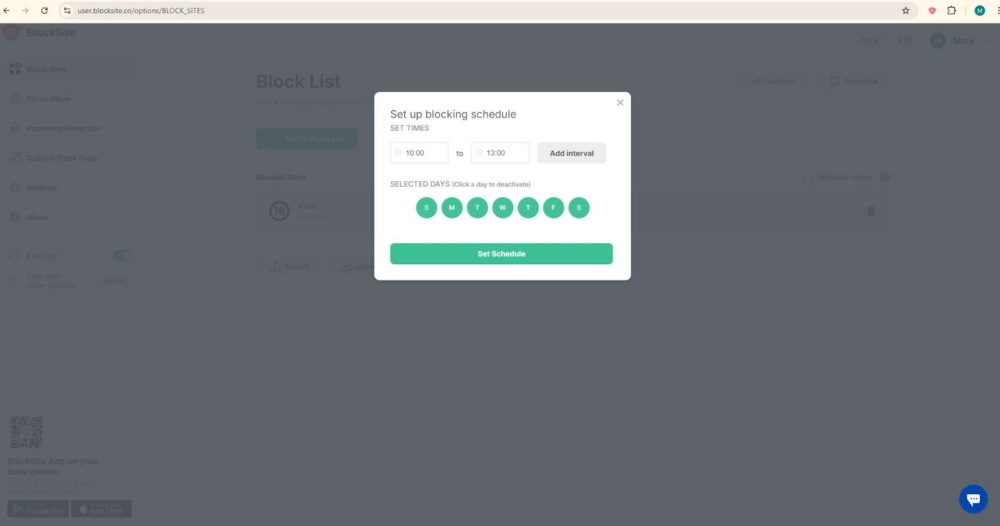
This is especially helpful if your day tends to drift toward impulsive browsing or if you’re juggling tasks that require long stretches of concentration. With a predictable schedule, your digital environment starts supporting your goals instead of interrupting them. Over time, the consistency adds up: fewer distractions mean more steady progress and a smoother workflow.
Insights
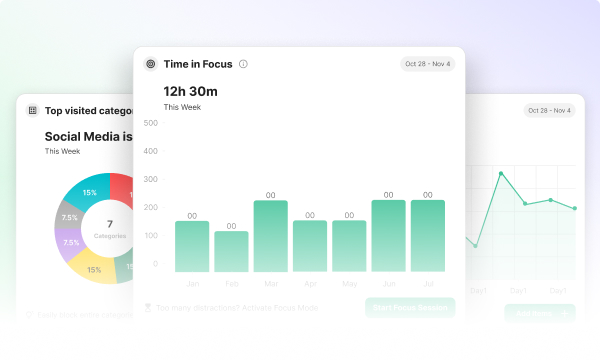
Insights takes the guesswork out of your browsing habits. As a feature that’s only available from the site blocker extension, it quietly tracks how long you stay on each site and turns that information into clean charts that reveal your patterns.
You’ll see exactly where your time goes and how your habits shift throughout the week. There’s no pressure to make changes right away. It’s ideal for people who want to start with awareness first, without immediately setting limits.
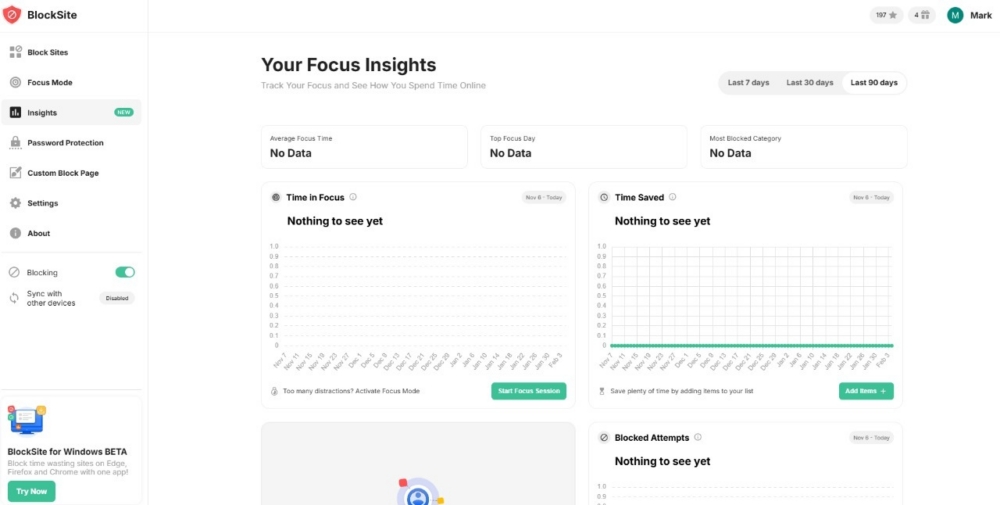
If you’ve ever asked, “Is there a way to track my digital habits effectively?”, this is where you’ll find your answer. The data you get is simple, honest, and actionable. Once you see the full picture, like which sites dominate your day, which ones creep in during work hours, or which evenings disappear into scrolling, you can decide what comes next. Maybe that means adding a few blocks, tightening your schedule, or continuing to observe how your habits evolve.
Together, Schedule and Insights give BlockSite a clear purpose: help you build better routines with tools that meet you where you are. Start with tracking, add structure when you’re ready, and shape a digital environment that supports the way you want to use your time.
[Track your digital habits with BlockSite for better control]
Take charge of your digital habits with the right tool
Think about how much better your day feels when you understand what pulls your attention. That’s the real value of tracking digital habits. Once you can see what’s happening in the background (the small checks, the quick scrolls, the tabs that steal more time than expected), you begin to spot patterns that shape your routine. And with that clarity, it becomes easier to stay focused, direct your time with more intention, and cut down the interruptions that slow you down.
You might be wondering, is there a way to track my digital habits effectively? There is, and it doesn’t need to be complicated. BlockSite gives you straightforward tools that make the entire process feel manageable rather than demanding. The Schedule feature helps you build steady routines, while Insights reveals how your behavior shifts over time.
With this kind of visibility, you’re making choices that support your goals, strengthen your day-to-day rhythm, and help you create an online routine that works for you rather than against you.
FAQs
What are digital habits?
Digital habits describe the routines that shape how you use your devices each day. They include how often you check your phone, the time you spend on social platforms, and the way you jump between apps or tabs. When you track these patterns, you get reliable information of where your attention actually goes.
Why should I track my digital habits?
Tracking helps you understand how your time is being spent and where it slips away. It shows the moments that drain your focus or leave you feeling overwhelmed. With that insight, you can strengthen your routines, avoid distractions, improve productivity, and support your wellbeing by making adjustments backed by real data.
What’s the difference between tracking and controlling digital habits?
Tracking reveals the facts: which sites you visit, how long you stay there, and what apps grab your attention. Controlling habits uses that information to shape better routines. It helps you set limits, reduce interruptions, and build healthier usage patterns. Think of tracking as the diagnosis and control as the treatment.
How often should I check my digital habit reports?
A weekly check-in works well. Daily reviews keep you aware, but weekly summaries reveal stronger trends, like shifts in social media use or improvements in focused work sessions. These broader patterns give you reliable guidance and help you make adjustments that support steady, long-term progress.
Can tracking my screen time really reduce it?
Yes. Clear visibility into your habits influences how you behave. Most people start adjusting once they see where their time is going. Pairing tracking tools with BlockSite makes it even easier. You gain direction, reduce unnecessary scrolling, and build healthier digital routines over time.
What if I don’t want to block sites but still want to track my habits?
You can use BlockSite in tracking-only mode to monitor how much time you spend on apps and websites without adding restrictions. This is a good choice if you want to start with awareness first. It lets you observe your habits freely and make changes gradually, at a pace that feels comfortable.