


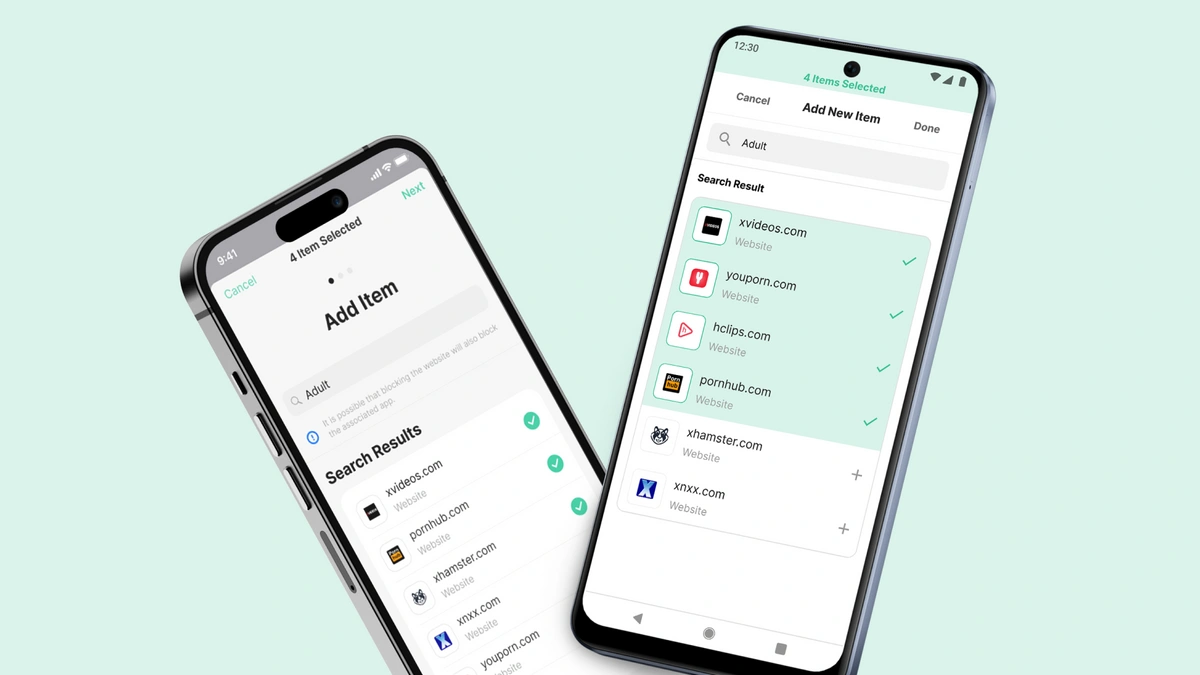
Adult website blocking is common for a simple reason: phones make it easy to reach any kind of content in seconds, including content you never meant to see. Whether you are setting up a child’s device, reducing distractions for yourself, or preventing accidental clicks of top blocked sites, the right setup can make adult sites much harder to reach and easier to avoid.
Why is it important to block adult websites on mobile phones?
There are a few main reasons people do this, and they often overlap. Here are the most common ones:
1. Protect children from inappropriate content
Kids do not have to be seeking adult content to run into it. It can appear through mistyped URLs, misleading links, pop-ups, or search results that are not filtered. Blocking reduces the chance of exposure and adds a safety layer that does not depend on constant supervision.
2. Improve focus and productivity
Adult sites are designed to pull attention, and even brief visits can derail work, study, or sleep routines. Blocking removes an easy distraction and cuts down on “just checking” moments that turn into lost time.
3. Support healthier digital habits
Many people block adult content as part of broader habit change, for example cutting impulsive browsing, improving sleep habits, or keeping a device “clean” for family spaces. When access takes zero effort, habits are harder to change. Putting a barrier in place helps you follow through on what you already decided.
4. Reduce accidental exposure
Even adults who are not looking for this content can land on it through redirects, ad traps, or unsafe sites. Blocking lowers the odds that a wrong tap leads to something explicit, risky, or malware-prone.
How to block adult websites on my phone permanently?
There is no single “set once, solved forever” method that works perfectly in every app, browser, and network. The best method is layering: use built-in controls, add a stronger blocker if you need it, and consider network-level filtering for an extra safety net. Here are the best methods:
1. Use built-in phone settings
Built-in controls are the best starting point because they are already on the device, work at the system level, and can be protected with a passcode or PIN.
On Android, two common levers are search filtering and parental controls. On iPhone, Screen Time’s web content restrictions are the main control.
You can also strengthen “built-in” protection by locking changes behind a passcode and keeping that passcode private if you are setting up a child’s device.
2. Install third-party blocking apps
If you want more control than system settings provide, third-party blockers can add useful capabilities such as category blocking, keyword-based blocking, schedules, and password protection. They can also help keep blocks consistent across different browsers and devices when you use more than one screen.
This is usually the right method when:
- You want to block by category instead of chasing individual URLs
- You want schedules (study hours, bedtime, work blocks)
- You want a “harder to bypass” setup with password protection
- You want the same rule set across phone and computer
3. Apply DNS or network-level filters
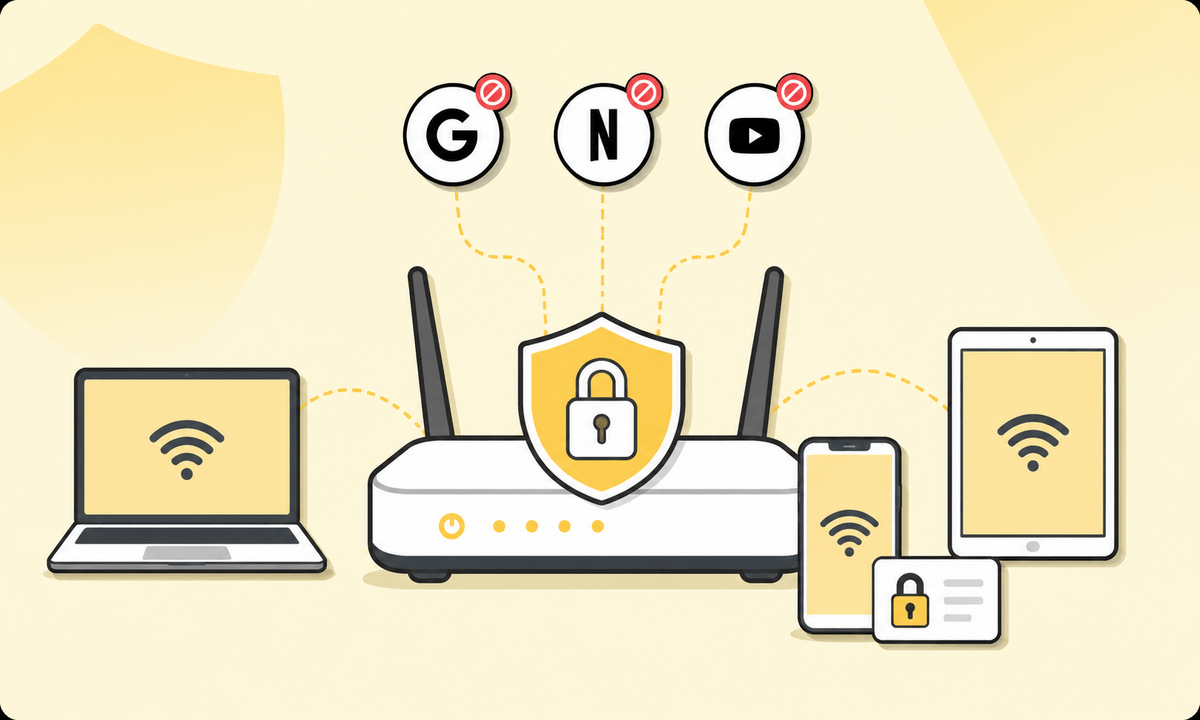
DNS or network-level filtering is another layer that can block adult domains before the page even loads. It is useful in two main scenarios:
- Shared environments, for example family Wi-Fi, where you want the same protection for multiple devices
- Devices where you do not control every browser setting, or where someone can easily switch browsers
Keep your expectations realistic: network filters are strong, but they may not catch everything, and some apps can bypass DNS settings depending on how they connect. That is why this layer is best when combined with device restrictions and a blocker.
4. Use BlockSite tools (Android, iPhone & PC)
BlockSite is built for blocking distractions and controlling access to specific sites, keywords, and categories. For adult content, the most relevant capabilities of this focus toolkit are:
- Block by category for adult content, so you are not manually listing every URL

- Block by keyword, so pages associated with specific terms do not load
- Password protection, so settings and blocks are harder to change on impulse or by another person
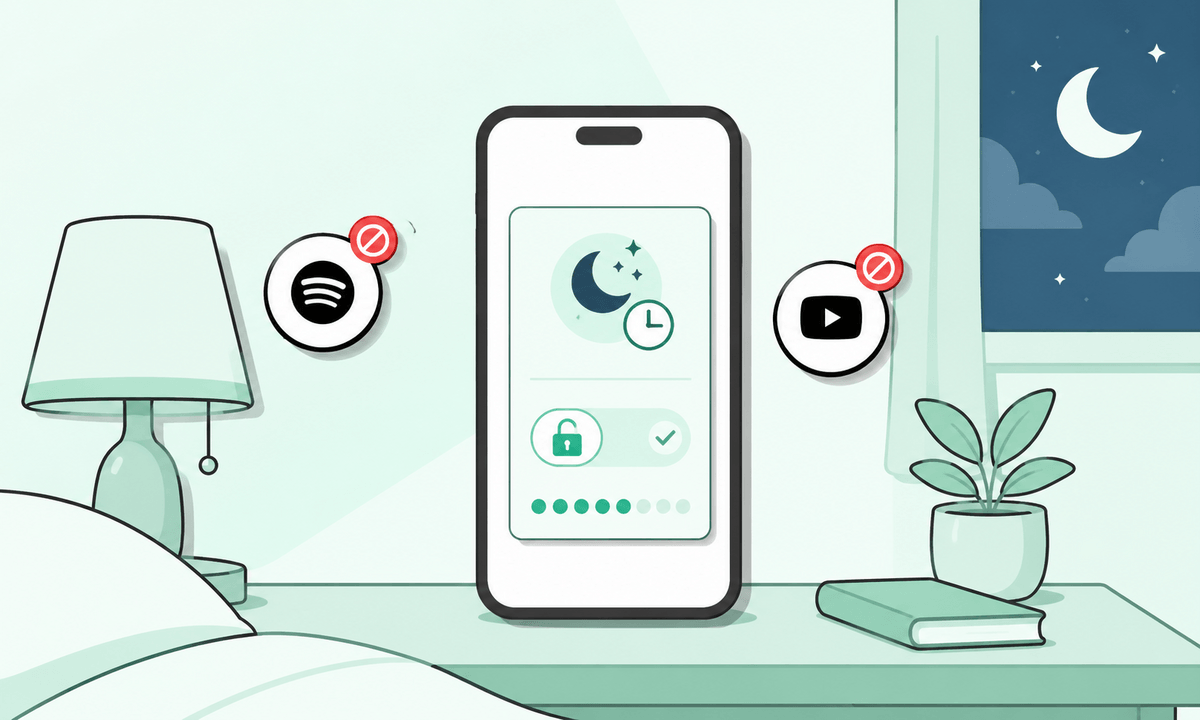
- Scheduling, so you can tighten restrictions during high-risk times (late night, study sessions, work hours)
- Focus Mode with structured work sessions and breaks for habit-friendly routines
- Insights, so you can understand browsing patterns and adjust what you block
- Redirect behavior, so a blocked attempt can take you somewhere better instead of leaving you stuck
- Custom blocked pages, so the interruption is clearer and more intentional
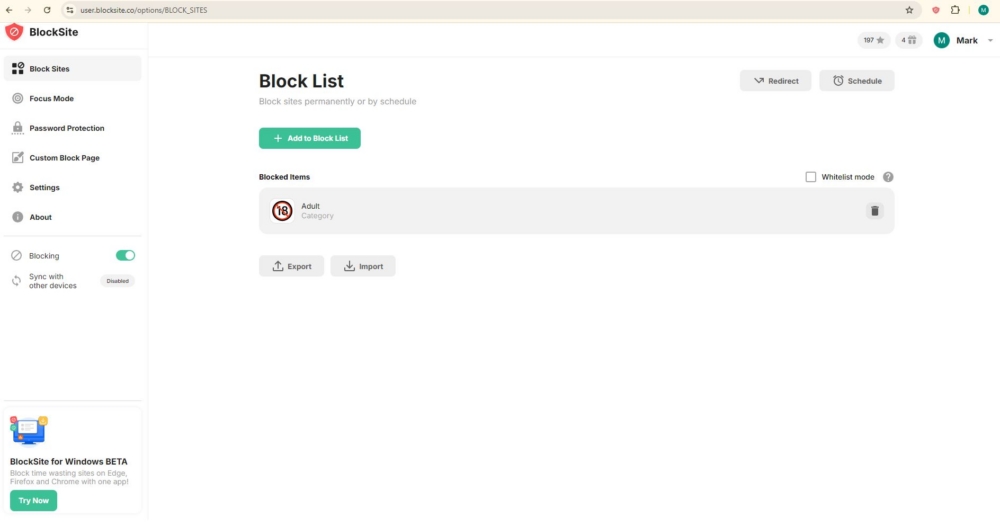
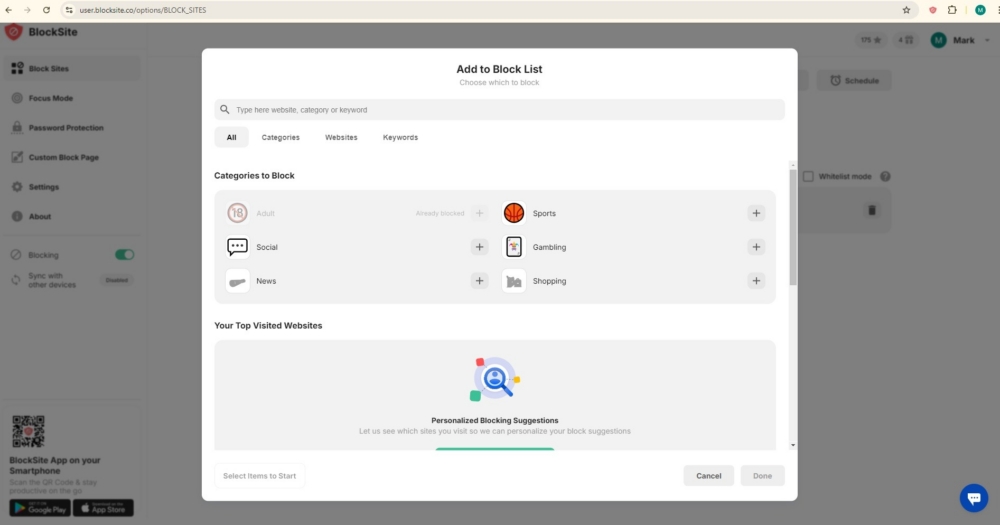
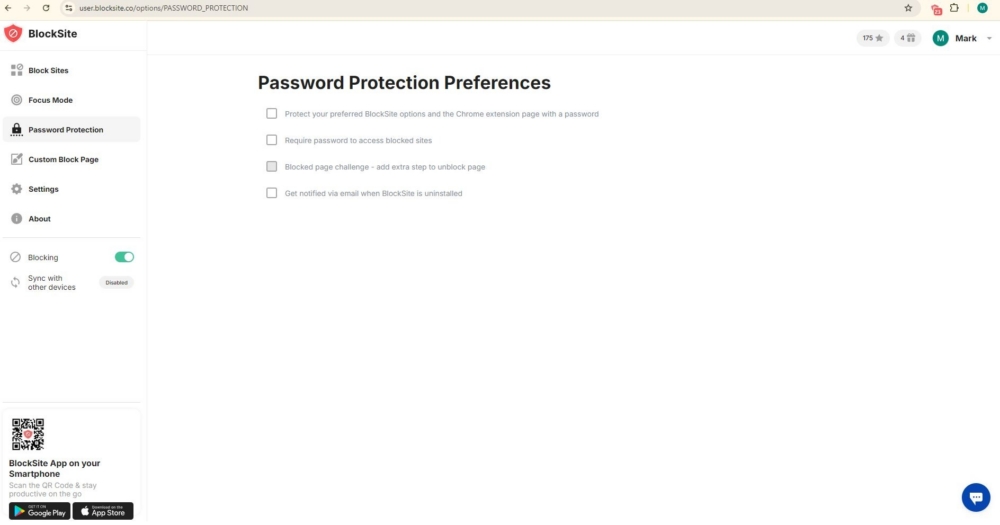
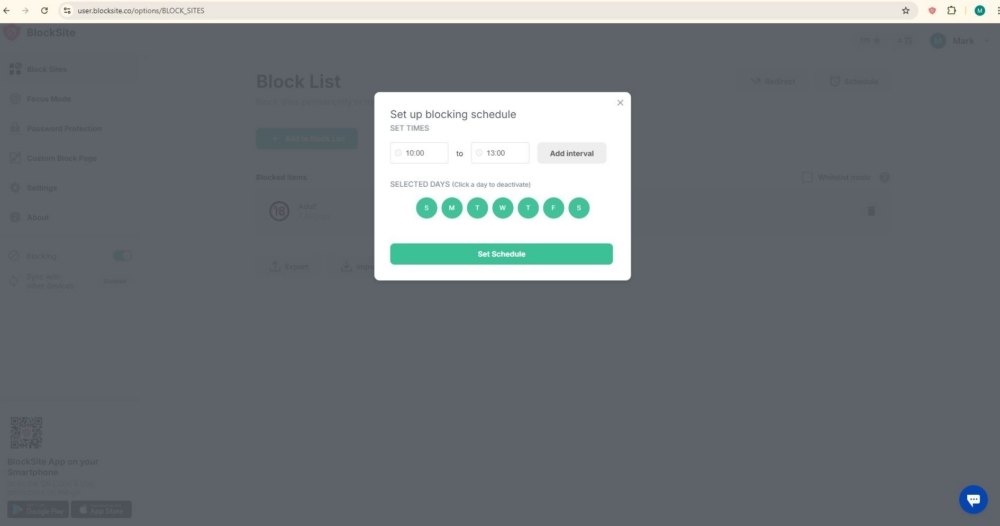
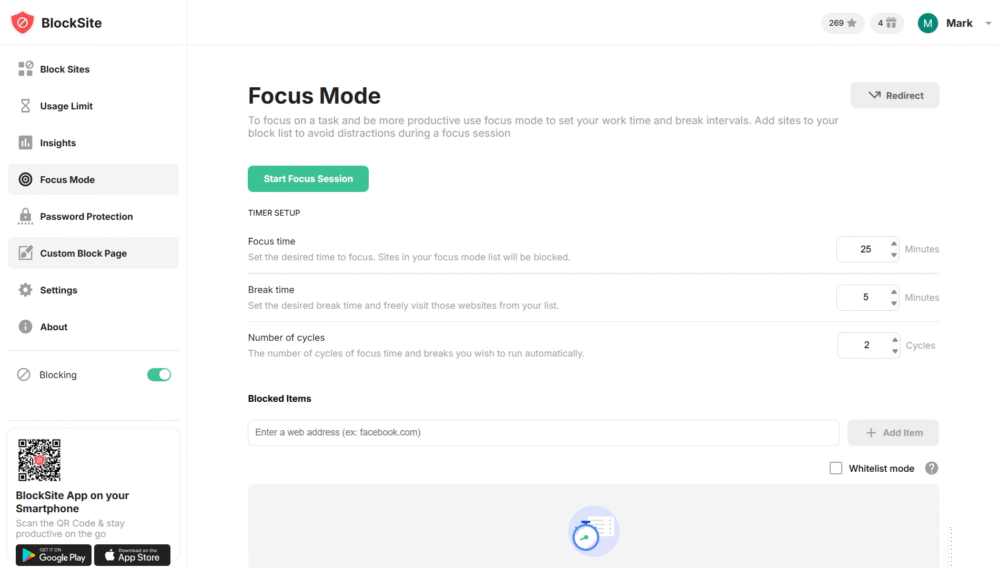
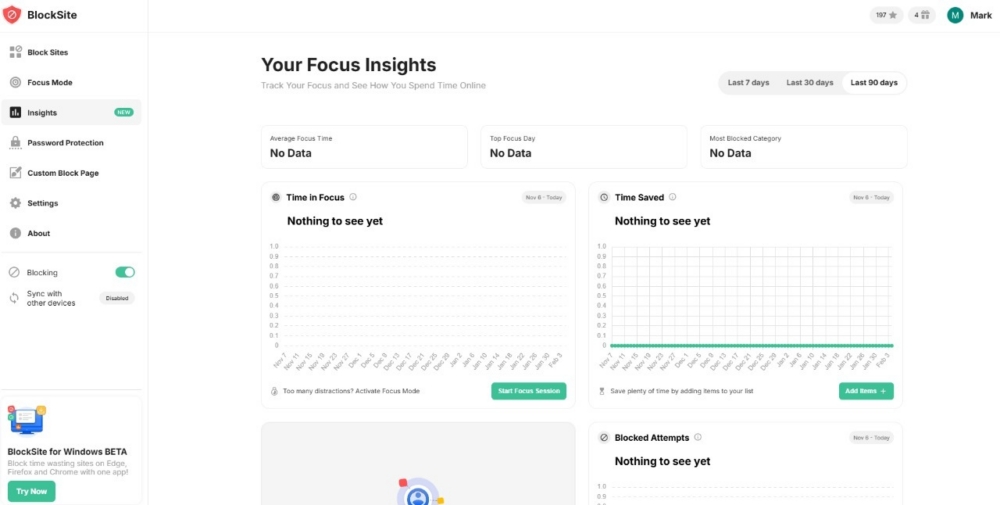
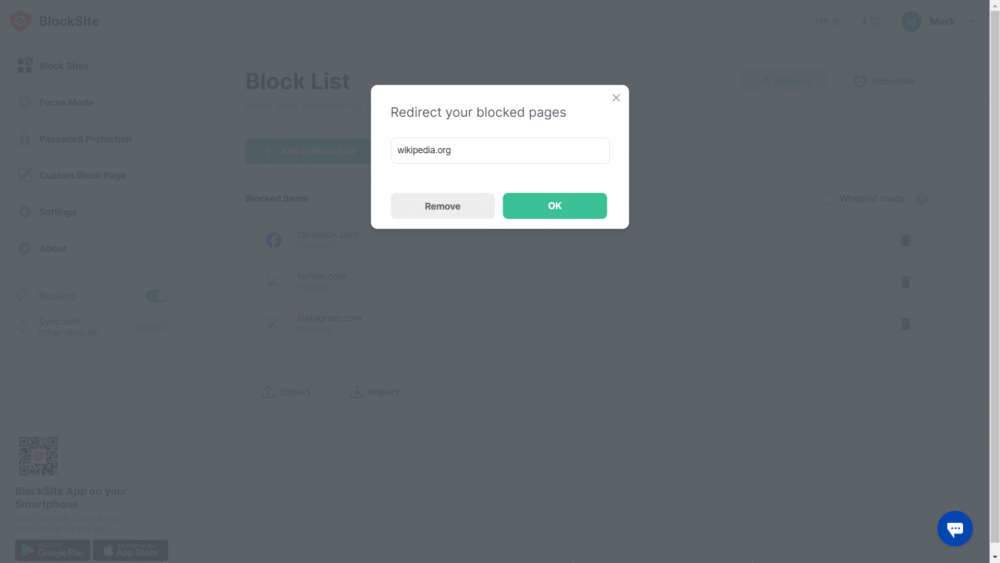
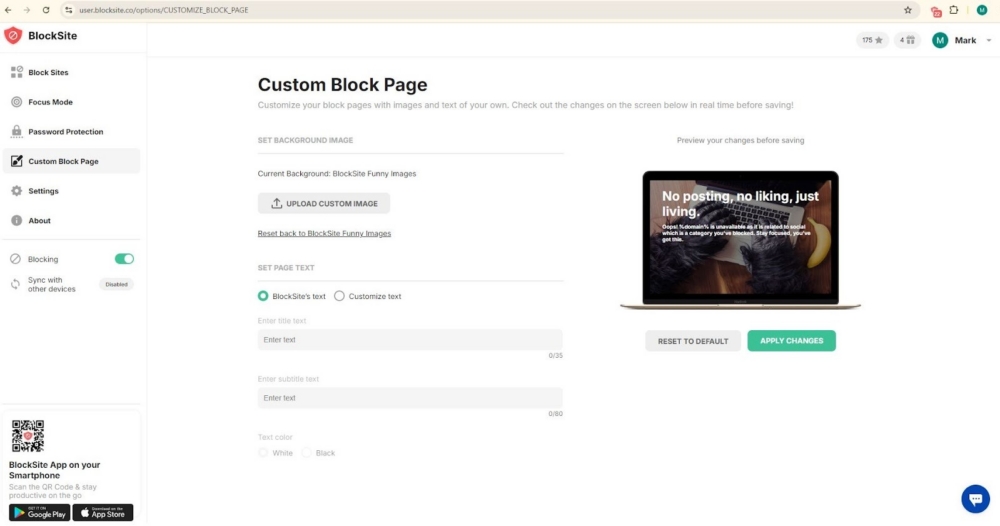
In addition, you can sync the blocking across devices. This helps keep protection consistent if you use both a phone and a computer.
If your main question is how to block adult websites on my phone permanently, BlockSite is most effective when you treat it as a layer on top of device settings, not a replacement for them. The combination is harder to bypass and easier to maintain. If your goal is also how to stop watching adult videos, add a schedule and password protection so the block is hardest to bypass during your usual trigger times.
How to block adult websites on an Android phone (via device settings)
Below is a simple, device-settings-first setup. It does not require advanced technical steps:
1. Enable SafeSearch in Google
- Open your browser on Android.
- Go to Google.
- Open Google settings from the menu.
- Find SafeSearch filters and turn SafeSearch on.
This filters explicit results in Google searches, which helps prevent accidental exposure and makes adult content show up less often in search results.
2. Turn on Parental Controls in Google Play
- Open the Google Play Store.
- Open the menu and go to Settings.
- Find Parental Controls and toggle it on.
- Create a PIN so the settings cannot be changed without it.
- Set restrictions for content types (apps, games, movies, music) and pick the maturity levels you want.
This helps reduce exposure through app content and makes it harder to install new browsers or apps that could bypass your setup.
3. Use browser safety options where available
Some browsers include safe browsing or content-related settings. If your browser includes privacy or safe browsing settings that reduce explicit content, turn them on.
4. Monitor and adjust
Blocking is not a one-and-done job. New sites appear, and people find new workarounds. Schedule a quick check once in a while:
- Verify SafeSearch is still on
- Confirm Play parental controls are still protected by the PIN
- Review browser settings after major updates
If you are specifically searching how to block adult websites on Google Chrome on an Android phone, the steps above are still the right baseline because they strengthen search filtering and help prevent bypass through new app installs.
How to block adult websites on an iPhone (via Device Settings)
On iPhone, Screen Time is the system-level control center for content restrictions. Use a passcode so settings cannot be changed casually.
1. Open Screen Time
- Open Settings.
- Tap Screen Time.
2. Turn Screen Time on and set a passcode
- Tap Turn On Screen Time, then Continue.
- Choose whether the device is yours or a child’s device.
- Set a Screen Time passcode to prevent unauthorized changes.
3. Enable Content and Privacy Restrictions
- In Screen Time, tap Content and Privacy Restrictions.
- Toggle it on.
- Enter your Screen Time passcode if prompted.
4. Limit adult websites
- Tap Content Restrictions.
- Go to Web Content.
- Select Limit Adult Websites.
5. Add specific sites to Never Allow (optional but recommended)
If there are specific sites you want blocked no matter what, add them to Never Allow. If there are safe sites you want always accessible, add them to Always Allow.
6. Review periodically
No filtering list catches everything, so do occasional spot checks. If someone is motivated to bypass restrictions, they often try to:
- change Screen Time settings
- use a different browser
- use private browsing tricks
A Screen Time passcode and a consistent blocking layer help reduce those bypass paths. If you are looking for how to block adult websites on my iPhone, these steps are the most reliable built-in option because they apply at the system level and can be locked behind a passcode.
Set it once, keep it simple
Blocking adult content is straightforward when you combine the right layers. Built-in settings do a solid job for most households, especially when protected with a passcode or PIN. If you need tighter control, apps add capabilities like category blocking, scheduling, password protection, and cross-device consistency.
For many people, the best setup looks like this:
- Turn on device restrictions first
- Add a blocker for stronger control and easier management
- Consider DNS or network filtering if you want coverage across multiple devices
If you also need coverage beyond your phone, BlockSite can extend the same approach to your computer, so your rules are consistent across screens and harder to bypass. That matters if your goal is long-term habit change, not a temporary fix.
FAQ
Can I block adult websites without installing anything?
Yes. On iPhone, Screen Time can limit adult websites and let you add specific sites to a blocked list. On Android, SafeSearch and parental controls are a strong baseline, especially when protected by a PIN. But if you want the simplest setup that stays consistent across browsers and devices, use BlockSite alongside these built-in controls.
Will these blocks work in every browser?
They can reduce exposure significantly, but coverage varies. System-level restrictions help the most, and adding BlockSite can make the coverage more consistent across browsers.
What is the best option for a shared family phone or tablet?
Start with built-in restrictions and lock them with a passcode or PIN. If more than one person uses the device, consider adding a blocker with password protection so settings cannot be changed casually.
How do I block adult websites on a computer too?
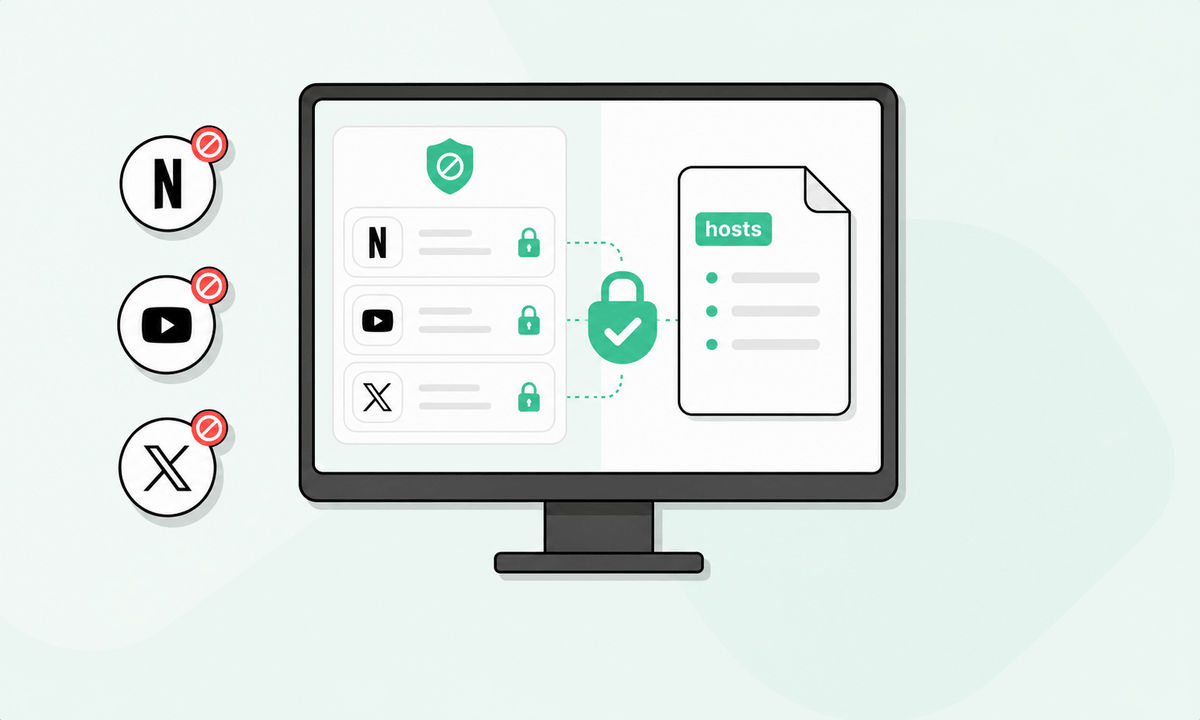
You can use BlockSite, which is a dedicated blocker that works across devices, or use device-wide methods such as system-level blocking. Many people choose a blocker so it is easier to manage and less technical than editing system files. This is commonly searched as how to block adult websites on my computer and how to block adult websites on my laptop permanently.
What if someone keeps trying to bypass the blocks?
Use passcode or password protection, limit the ability to install new browsers or apps, and consider uninstall prevention where available. The goal is to remove easy bypass options, not to rely on willpower.